
[ Blog ]Why AI Pricing and Margin Tools Fail in Ready-Mix
AI pricing and margin tools are getting a lot of attention in ready-mix. That is not surprising. Margins are tight, pricing pressure is constant, and most producers know there is value being lost somewhere in the business.
The problem is that many tools promise margin improvement without addressing why margin gets lost in the first place.
In our experience, pricing and margin tools tend to fail for one of two reasons. They are either too narrow in what they can see, or too shallow in what they can actually help a team do. They may surface information, but they do not help leadership understand what matters, why it is happening, or what to do next.
That is where disappointment usually begins.
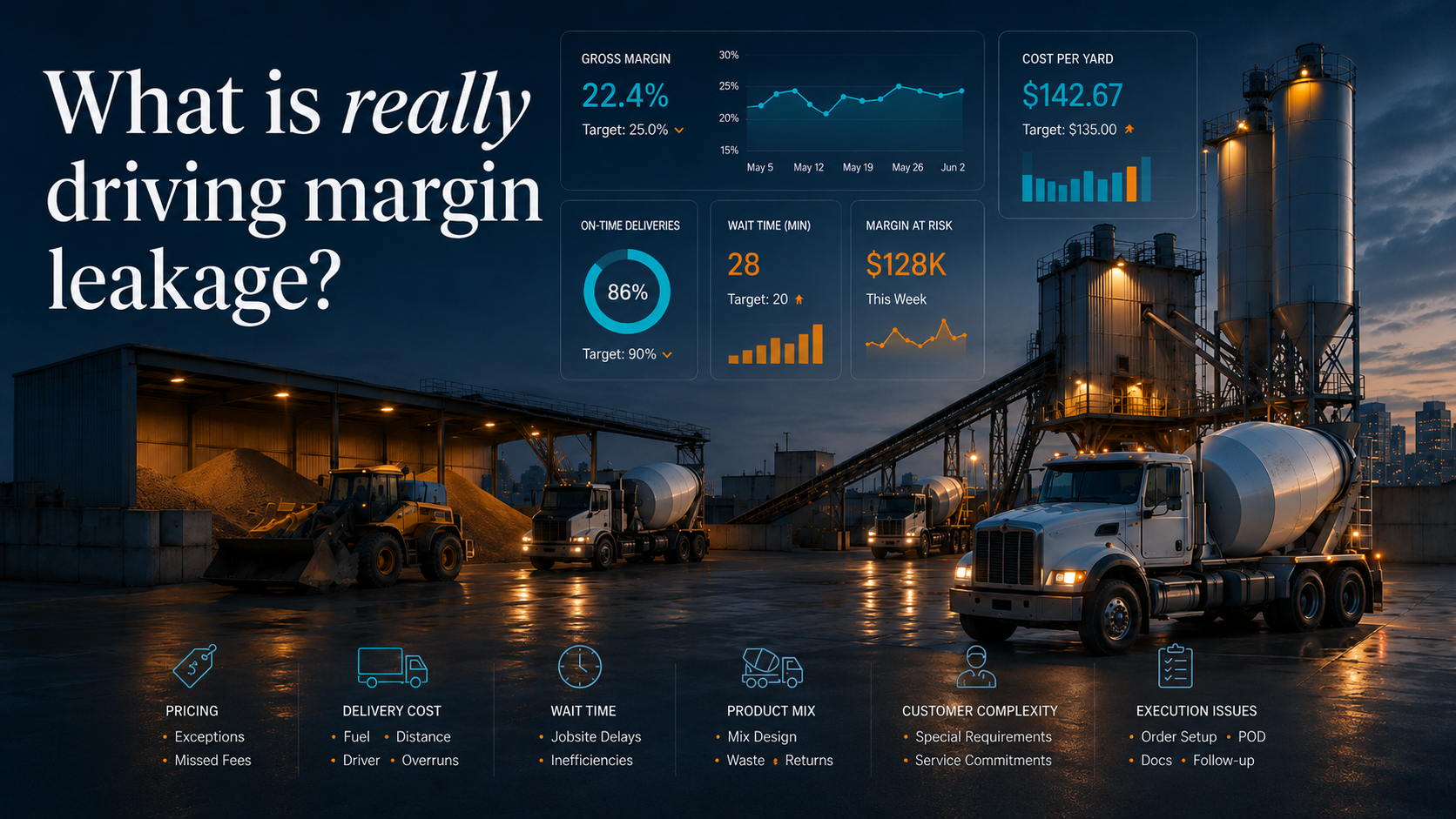
The problem is rarely pricing alone
Many tools approach margin as if it is mainly a pricing issue. In ready-mix, that is only part of the story.
Margin leakage often comes from a combination of factors, including:
• Pricing exceptions and missed fees
• Delivery cost overruns
• Inefficient routing or wait time
• Product and mix issues
• Customer-specific service complexity
• Order execution problems
In our experience, this is one of the biggest reasons pricing and margin tools underperform. They are built to look at one slice of the problem while margin is actually being shaped across the business.
A tool can recommend a price change and still miss the operational issue that is quietly draining profit.
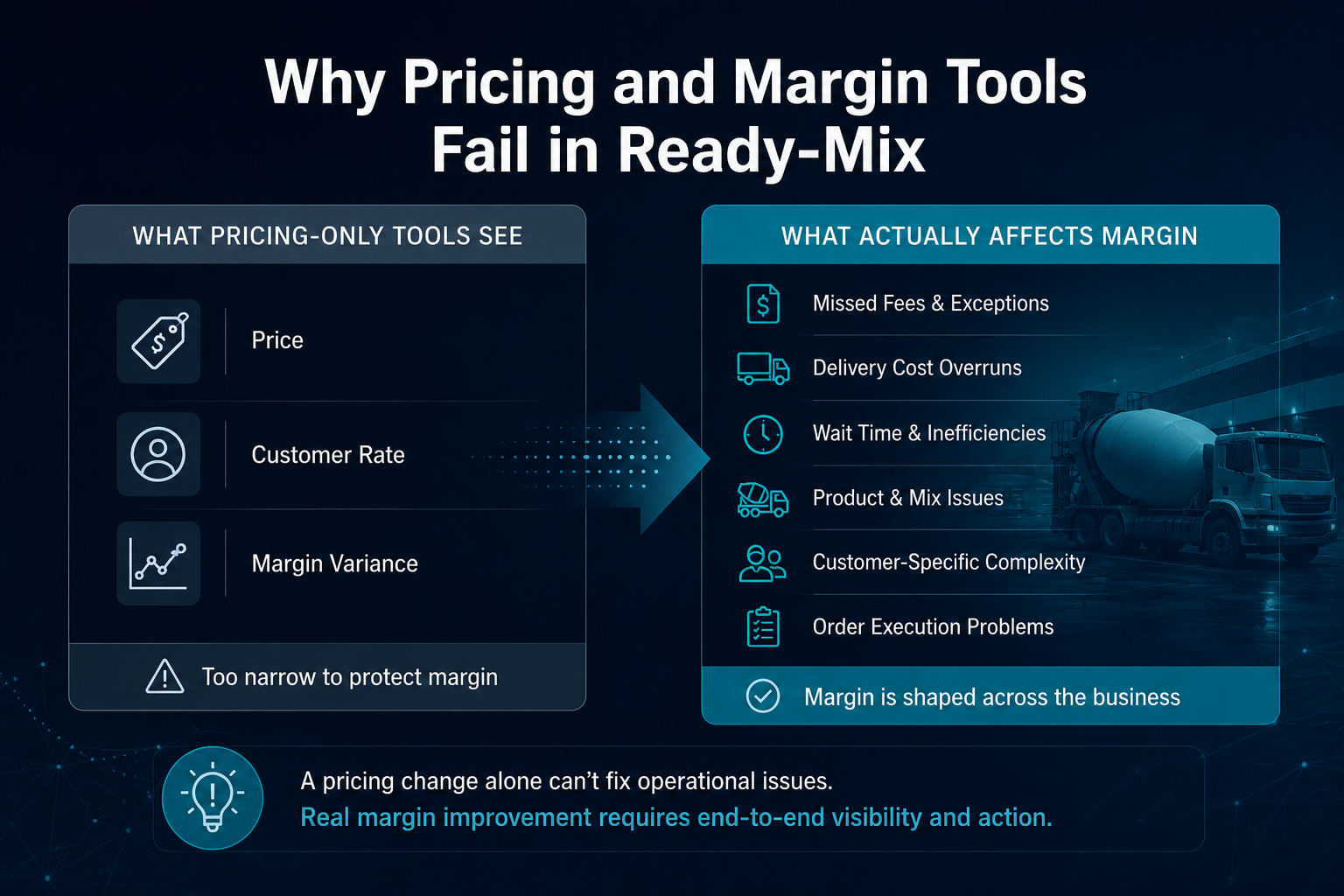
Better pricing does not fix weak execution
This is another common failure point.
A business can improve pricing logic and still lose margin every day through missed charges, excess delivery cost, avoidable wait time, poor order setup, or service issues tied to specific customers, products, or jobs. If the tool cannot see those factors, it may point the team in the wrong direction or leave leadership with only part of the answer.
In our experience, pricing tools often fail when they treat margin as a front-end commercial problem instead of an operational and financial outcome.
That distinction matters. Margin is not just won in the quote. It is protected or lost in execution.
Generic AI struggles with ready-mix logic
Not every AI tool that can talk about pricing can handle pricing in ready-mix.
Ready-mix has its own business rules, cost structures, accessorial logic, and operational realities. Small loads, fuel recovery, delivery distance, wait time, product mix, service commitments, and customer-specific pricing structures all influence real margin performance.
If the AI does not understand those realities, the answer may look intelligent without being useful.
We have typically seen generic AI tools struggle in three areas:
• Understanding how ready-mix margins are actually calculated
• Connecting pricing to operational cost and service complexity
• Identifying which margin issues are worth acting on first
This is why a polished answer is not enough. The logic behind it has to reflect the business.
Tools fail when users still have to do the analysis
A lot of pricing and margin software still leaves the hardest work with the user.
The system may show a chart, flag a variance, or identify a customer with lower margin. Leadership still has to figure out why it happened, whether it matters, and what action should follow.
That is not the same as decision support.
In our experience, this is where many tools lose momentum after the initial excitement. They help teams find data faster, but they do not remove enough of the analytical burden to change how decisions get made.
If the user still has to build the story, the tool is only partway there.
Weak trust leads to weak adoption
Even when a pricing or margin tool has strong potential, it can still fail if users do not trust the answer.
That usually happens when:
• Metric definitions are unclear
• Results do not match what the team expects
• Calculations cannot be explained
• Pricing signals are disconnected from operational reality
In ready-mix, trust is especially important because pricing and margin decisions affect both customer relationships and financial performance. Leaders are not going to act on recommendations they do not understand or cannot validate.
In our experience, adoption slows quickly when teams have to question whether the tool is measuring the right thing.
Margin tools fail when they cannot connect insight to action
Finding a margin problem is not the same as fixing one.
A useful system should help answer questions like:
• Where is margin leaking most right now?
• Is this a pricing issue, a product issue, or an execution issue?
• Which customers or orders should we review first?
• What action would have the biggest near-term impact?
Too many tools stop at visibility. They point to an issue without helping a team prioritize or respond.
That is one of the clearest reasons tools underperform in practice. They provide information without enough operational guidance.
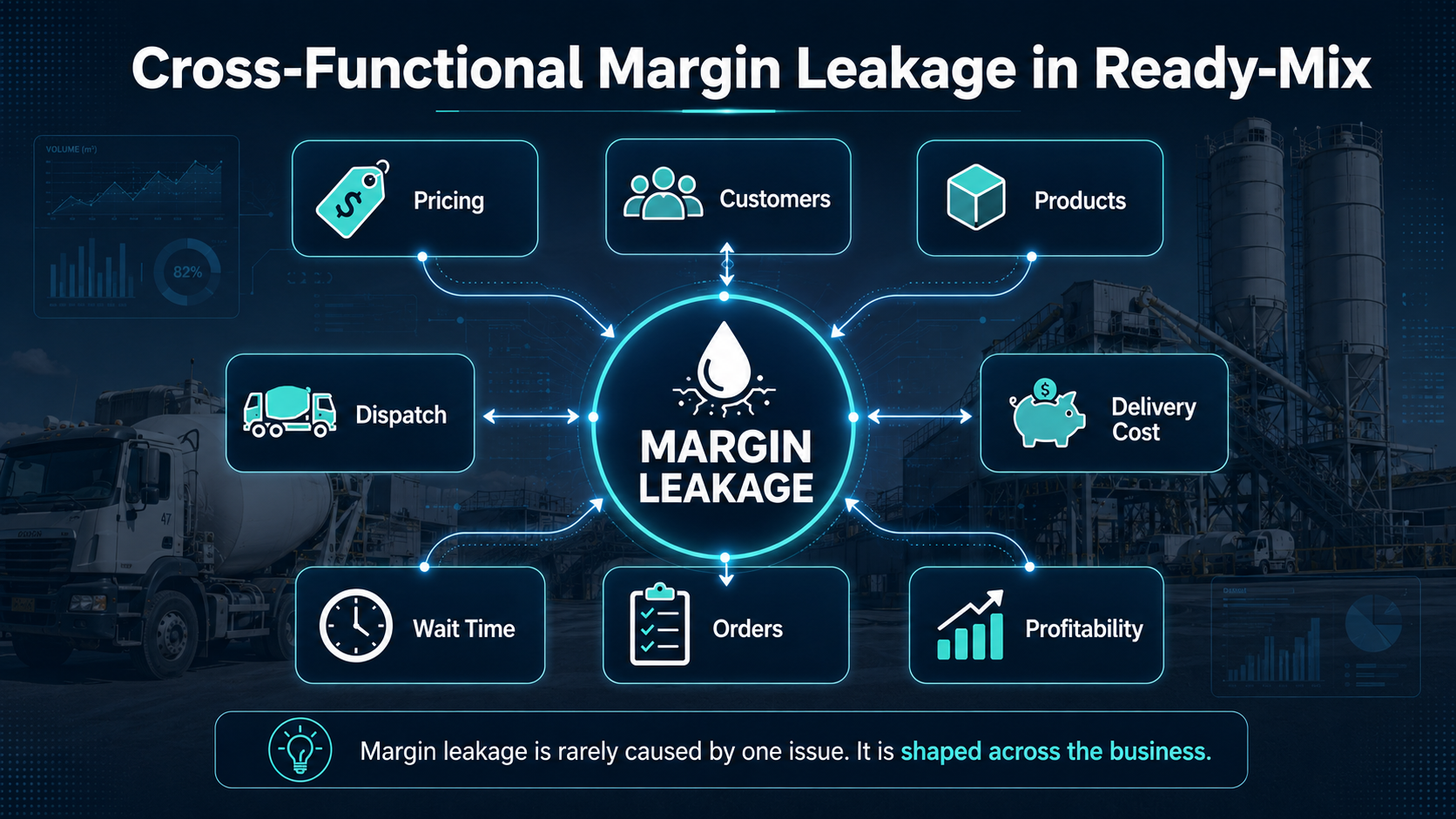
What better looks like
In our experience, stronger pricing and margin tools do not look at pricing in isolation. They connect pricing, operations, service execution, and cost in one view.
They help leadership:
• Identify where margin is leaking
• Understand what is driving it
• Quantify the impact
• Prioritize what to fix first
• Act before the loss gets repeated
That is a very different standard than simply showing lower-margin customers or pricing variance.
The best tools help producers protect margin across the business, not just review it after the fact.
The real goal
The goal is not just to optimize price.
The goal is to improve margin performance in the real world of ready-mix, where service, execution, and cost all shape the outcome.
That is why pricing and margin tools fail so often. They promise a narrower solution than the business actually needs.
The better question is not, “Can this tool help us price better?” It is, “Can this tool help us understand where margin is leaking and what to do about it?”
That is where real value starts.
If you are evaluating pricing or margin tools for ready-mix, look beyond the pricing engine. Focus on whether the system helps you identify where profit is leaking, understand why, and act faster.
Want to see how C60 helps producers move from margin visibility to action? Explore Ask C60, C60 AI Agents, and VIBEOptimizing in action.
Frequently Asked Questions
Why do AI pricing tools fail in ready-mix?
AI pricing tools often fail in ready-mix because they treat margin as a pricing issue alone, while real margin leakage is also shaped by delivery cost, execution, product mix, missed fees, and customer-specific complexity.
Why do margin tools underperform in ready-mix?
Margin tools underperform when they only surface information instead of helping leadership understand what matters, what is causing the loss, and what action should happen next.
What causes inconsistent results from AI margin optimization software?
Inconsistent results often come from weak business logic, unclear metric definitions, poor alignment with ready-mix cost structures, and limited visibility into the operational factors that affect margin.
What should ready-mix producers look for in a pricing or margin tool?
Producers should look for tools that connect pricing, operations, execution, and cost in one view, support trust with clear logic, and help teams prioritize where to act first.
Is better pricing enough to improve margin in ready-mix?
No. Better pricing helps, but margin can still be lost through missed charges, inefficient routing, excessive wait time, product issues, and poor execution.
